CLEMSON – In 1931, Clemson was getting passed in football.
In its young football history to that point, Clemson had pretty good success for a program that was just 35 years old. In the early years, John Heisman led the program to three SIAA (Southern Intercollegiate Athletic Association) Championships and the Tigers won another under Bob Williams in 1906.
Clemson sprinkled in a few more good years on the gridiron before joining the Southern Conference as charter members in 1921. In those early years in the SoCon, Josh Cody put together some talented Clemson teams in the late 1920s, including three consecutive eight-win seasons, which was rare in those days.
Cody recorded a 29-11-1 record in four seasons, including a perfect 4-0 record against rival South Carolina, the only coach in Clemson history to coach at least four years in the rivalry and produce a perfect record.
After Cody left Clemson for Vanderbilt following the 1930 season, the program dropped off. Though not necessarily the fault of head coach Jess Neely.
College football was changing and it was starting to pass Clemson bye.
No one knew this better than Neely, who was an assistant coach at Alabama when the Crimson Tide won the 1930 National Championship and beat Washington in the 1931 Rose Bowl. He knew what kind of investment southern powers at the time like Alabama, Vanderbilt, Tulane, Sewanee, Georgia and Georgia Tech were doing and he knew what direction they wanted to go.
Those schools, west of the east coast of the SoCon, were doing whatever it took to succeed in athletics and rumors of their departure to create another league was getting around. There was controversy on some of the SoCon’s rules and how it could hold them back.
Once the SEC (Southeastern Conference) was formed in December of 1932, they began talks on allowing athletes to be eligible for normal student aid, such as tuition, books, and room and board.
By this time, Clemson—a small military school—was struggling to compete.
On October 16, 1931, the Tigers were stunned, 6-0, by The Citadel in a game played in Florence, S.C. After the game, Neely, Captain Frank Jervey and others met in a car outside the stadium to discuss ways Clemson could help its football program get back on track.
The meeting got the ball rolling towards the establishment of the IPTAY Foundation. Clemson scored just three touchdowns and won one game during the 1931 season. The 1932 and ’33 seasons were not much better, as the Tigers won a combined six games.
However, things started to change in August of 1934.
IPTAY, the nation’s first scholarship fundraising organization, was founded on August 20, 1934. Dr. Rupert Fike, a cancer specialist from Atlanta and Clemson class of 1908, wrote Neely a letter documenting the formation of the organization.
“Last night we had a little meeting out at my house and organized the IPTAY (I Pay Ten A Year) Club,” Fike wrote. “The purpose (of IPTAY) shall be to provide financial support to the athletic department at Clemson and to assist in every other way possible to regain for Clemson the high athletic standing which rightfully belongs to her.”
The organization was first established as a secret organization and initial membership dues were set at $10 a year. The excitement about the organization carried over into the 1934 season and the Tigers ran to their first winning season since 1930.
Clemson had gone 0-5-1 against Furman and South Carolina during those years, then defeated both teams in 1934.
By the end of the late 1930s, Clemson was back to being a Southern power, which included a win over Boston College in the 1940 Cotton Bowl to conclude a 9-1 season in 1939.
Now under the direction of Frank Howard, the Tigers won their first SoCon title in 1940 and again with an undefeated team after the Great War in 1948 (11-0). The 1950 team did not win the conference but produced a 9-0-1 season which included a win over Miami in the 1951 Orange Bowl.
Clemson continued its success under Howard, winning the ACC six times, while participating in four more bowl games.
IPTAY continued to push Clemson forward when changes were needed by the mid-1970s and then again in the late 2000s. Each time, Clemson pushed ahead and exceeded expectations.
Clemson built the state-of-the-art Jervey Athletic Center in 1974, which at the time was a first in college athletics. It, along with the ACC lifting some of its eligibility rules for student-athletes, allowed the Tigers to win the 1978 ACC Championship and ultimately to Clemson’s 1981 National Championship Season.
Clemson owned the ACC in the 1980s and early ‘90s, before living in contentment for almost two decades. However, athletic director Terry Don Phillips led a charge—with IPTAY’s help—to change things when he took over in 2002, as he set out to update Clemson’s facilities, which he did by the end of the decade.
The new West End Zone and weight room immediately led to Clemson’s return to ACC dominance. In its first year in the new building, Clemson was playing for an ACC Championship and by 2011, the Tigers won the league for the first time in 20 years.
Head coach Dabo Swinney and athletic director Dan Radakovich continued Phillips’ legacy, as the football program’s facilities continued to improve with the Poe Indoor Practice Facility in 2012 and the Allen Reeves Football Complex in 2017.
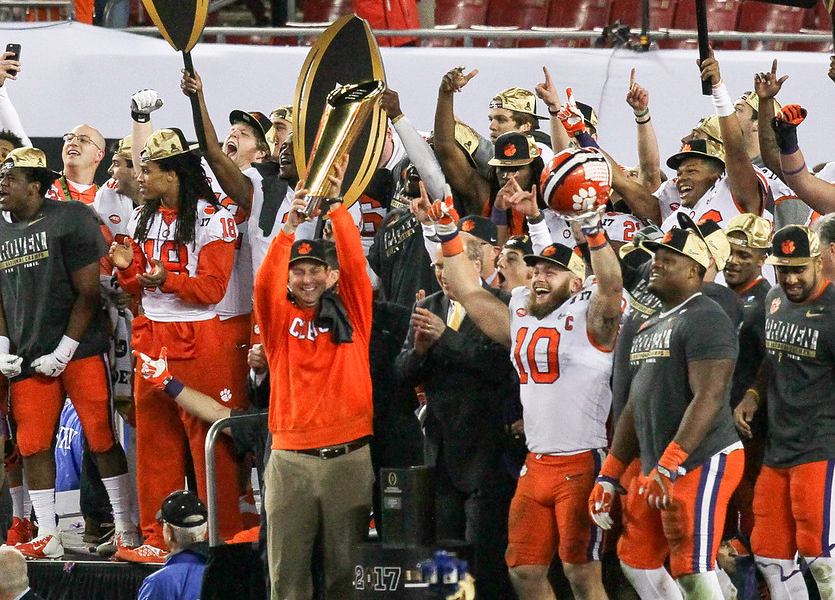
Clemson again exceeded expectations at an unprecedented level, winning two national championships, playing for it four times in five years and winning eight more ACC Championships in a 10-year stretch.
However, college football is once again changing and like it did in the early 1930s and mid-1990s, Clemson has fallen behind. The NIL, the transfer portal and revenue sharing have changed the game and all of college athletics.
Yes, President Donald Trumps’ Executive Order might move legislation to get things in order, but Clemson and IPTAY need to find a way to compete, especially in football or if it does not, the Tigers may never win another national championship.
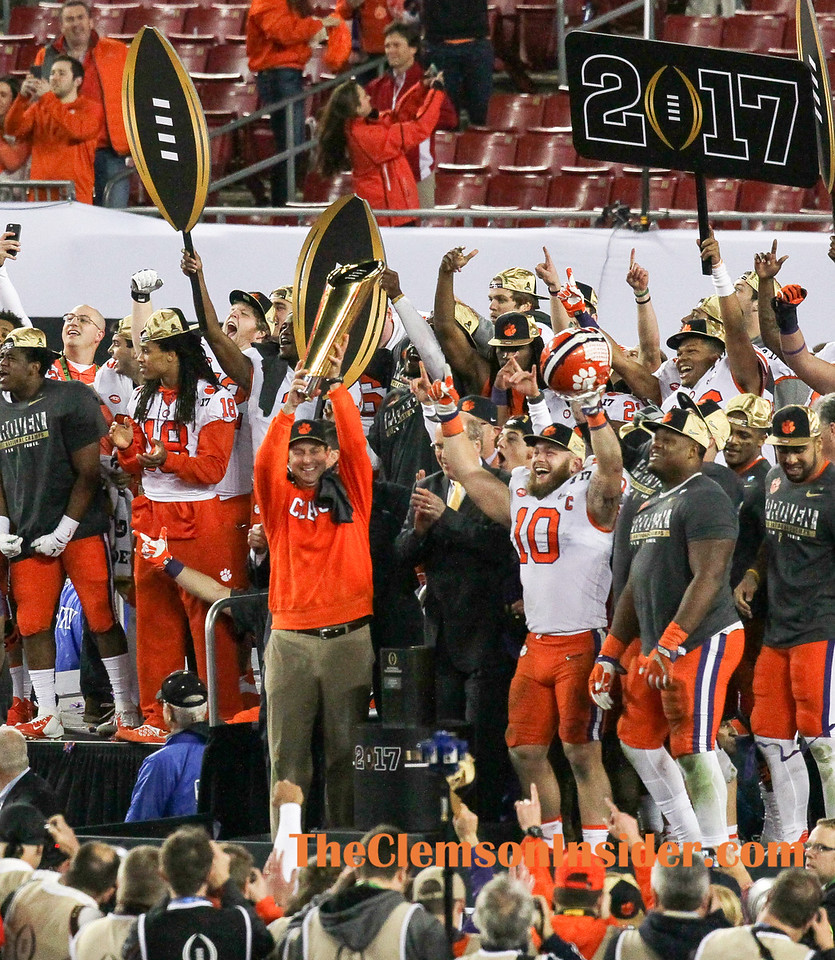
–photo by Bart Boatwright