CLEMSON — It is really sad how history and traditions do not mean as much to people now as they did when I was coming up, especially our younger generations.
I do not know if it is the education system, modern culture, social media or those pesky smart phones, but there seems to be a lack of understanding of our past than ever before, or at least that is the way I perceive it to be.
Maybe I am wrong.
However, I am not wrong about people’s lack of ability to educate themselves or to do a little research before posting things on social media, which is why I am writing this column today.
A site on Instagram got my attention this afternoon when it compared countries in the World Cup with college football programs. And though they did a good job on most of the teams on this list, I was not a fan of how they compared Clemson to Chile’s National team.
“Had a spectacular ‘Golden Generation’ that dominated an entire decade, winning multiple major trophies and going toe-to-toe with the absolute giants, but has faced a transitional challenge trying to sustain that peak.”
Again, this is an example of recency bias and not doing their homework.
This has nothing to do with Chile, by the way. However, Clemson is not a one-hit wonder. The Tigers have been here before, long before Dabo Swinney was its head coach.
Clemson may not be Alabama, but the Tigers have done more than just go “toe-to-toe with the absolute giants” of college football. They have beat them and they have done it for more than one decade.
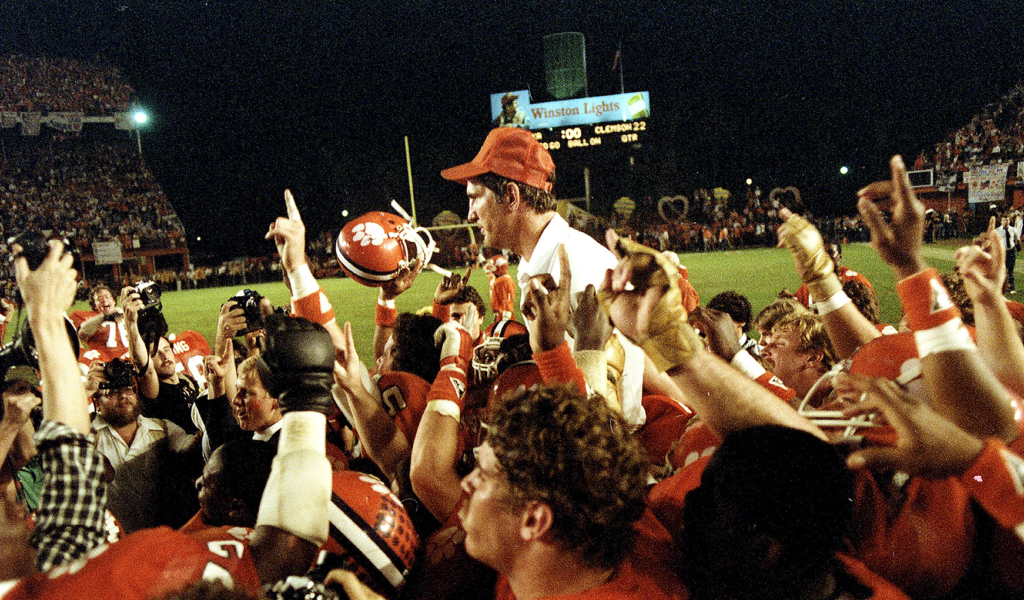
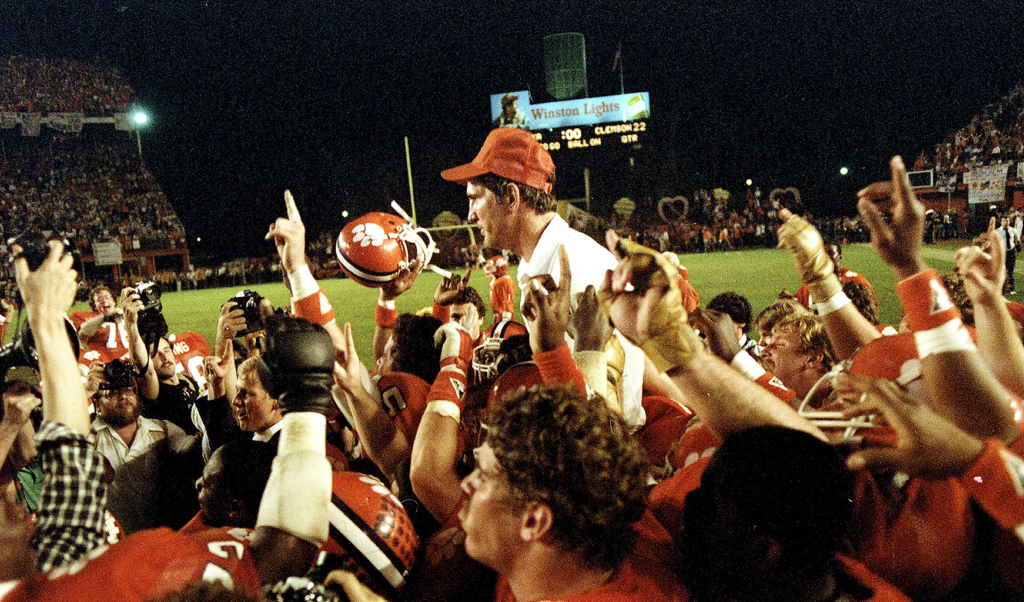
Also, Clemson has won more than just “multiple major trophies,” it has won multiple national championships, three to be exact. That’s write, three. Everyone always seems to forget about 1981.
I did not and I never will. Those Tigers went 12-0 and were the only undefeated team in the country that season.
Clemson’s teams from the 1980s combined for an 87-25-4 record. The Tigers’ 87 wins ranked sixth overall nationally in the 1980s, while its .767 win percentage ranked fifth overall. By the way, they beat powerhouses like Nebraska, Oklahoma, Penn State, Georgia and Florida State and won five ACC Championships.
The Tigers’ success of the 1980s dates back to the late 1970s when Steve Fuller and company went 27-8-1 (.764) from 1977-79, including an 11-1 record in 1978 that resulted in an ACC Championship and a Gator Bowl win over Ohio State.
In the 1950s, Clemson won 64 games, which ranked fifth nationally in total wins for the decade. The Tigers also won three ACC Championships and played in five bowl games, including the 1951 and 1957 Orange Bowl Classics and the 1959 Sugar Bowl.
Clemson’s 1951 team went undefeated.
A military school at the time, Clemson had a few down years in the 1940s because of World War II, as a lot of Clemson cadets, including the football team, were in the war. However, on the year’s the Tigers were able to field an entire team, Clemson went a combined 42-21-4 in the none-war years, including an 11-0 record in 1948, which included a Southern Conference Championship.
The 1938 and 1939 Tigers posted a combined 16-2-1 record, which included a trip to the 1940 Cotton Bowl, the program’s first bowl game and bowl victory.
Clemson also had a lot of success in the John Heisman years from 1900-1903, including a 6-0 team in 1900, while three of his four teams won SIAA Conference Championships.
In 130 years of playing college football, Clemson ranks 13th all-time with 815 victories. The Tigers also rank 15th (20th all-time) with a .624 win percentage in major college football.
Clemson’s 52 bowl appearances rank 13th all-time in college football, while its 27 conference championships rank 11th nationally.
By the way, Clemson has four former head coaches in the College Football Hall of Fame—Heisman, Jess Neely, Frank Howard and Danny Ford—all of whom had extended success coaching the Tigers.
Yes, Clemson had a ton of success in the 2010s. However, the football program deserves a lot more credit than it gets for its consistent success over 130 years.
Clemson Football is not a one-hit wonder. A little bit of research will tell you its rich history.