CLEMSON – Across most universities in America, school is out.
Exams are completed, students are back home in their respective hometowns or completing internships, and for most, stress levels are down.
However, for Clemson football, this summer period may be the greatest predictor of how the 2026 season will go. Just ask defensive coordinator Tom Allen.
“Our best teams improve the most over the summer because of the leadership of the guys on your team,” Allen said in March. “So that’s why that’s such a big deal to me.”
After the Tigers’ spring practice period wraps up with Clemson’s Annual Orange & White Spring Game each year, training structures look different for the next few months. Coaches have individual meetings with players, and then they are provided only eight hours a week of instruction until full-blown practices resume in fall camp.
This eight-hour block includes time with the strength staff, position-based instructional hours, and any additional coaching that can be squeezed in during that period. The rest, however, is up to the players.
“In order for them to do like seven-on-sevens in the summer, they do it on their own,” Allen said. “We call those player-led practices with skills and drills is what we call it here. And so that’s where we’re not allowed to be out at those but they don’t count in those eight hours, you know. So they’ll do some player-led drill work which we’ll teach them.”
After the Spring Game, Clemson’s coaching staff used its last practice of the spring to walk through all of these skills and drills, ensuring that Tiger players had ample opportunities to learn how to run through player-led practices.
Several upperclassman leaders, including linebacker Sammy Brown, wide receivers Tyler Brown, Bryant Wesco Jr, and T.J. Moore, cornerback Ashton Hampton and several others will most likely be at the helm of these drills this year, after several veterans graduated or were taken in the NFL Draft this offseason.
The drills they will run are largely based on individual player evaluations, and were crafted together by Allen, head coach Dabo Swinney, and offensive coordinator Chad Morris.
“It’ll be quite the process as we finish up spring next Monday, start our player evaluations on Tuesday and start player evaluations and then we’ll get into summer prep,” Morris said. “But yeah, this will be very very thought out and very detailed.”
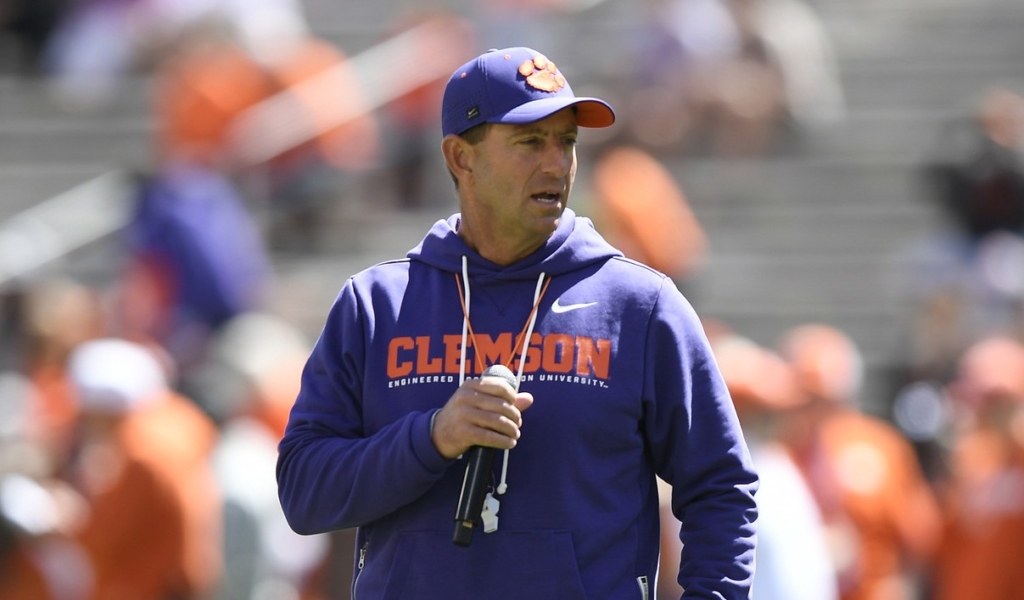
This phase, from now until just before the 2026 season begins in September, is what Swinney calls the “Transformation Phase.” Unlike the “Prime Time” and “Championship” phases during the fall season, the Transformation Phase is highly individual.
This is the time where players can get their bodies, mentalities, and skills at their sharpest before weekly competition wages on each player in the fall’s 12-game regular season.
“A lot of evaluation that goes into that (phase,)” Swinney said. “Strength conditioning, nutrition, medical stuff, obviously football, academics, you name it. It’s kind of a holistic opportunity to sit down with these guys and then just challenge them and help them as we call transform. So we kind of finished in the first quarter of our 26 season and now we’re entering the second quarter which we call the transformation phase.”
While the summer months are commonly referred to as being “deep in the offseason,” and fans are breathlessly waiting to get back into Memorial Stadium in the fall, this stretch lays the foundation for the season ahead.
After fall camp is completed, the Tigers head to Baton Rouge, La., to open their season against LSU on Sept. 5. While seven-on-sevens in the summer may feel faraway from the opener at Tiger Stadium, there are only 12 more Saturdays from until the 2026 football season begins.