CHARLOTTE — It has been over a year since Clemson and Florida State settled their dispute with the ACC, allowing the league to focus on its future.
The settlement supposedly ended the conversation about the Tigers and Seminoles leaving the ACC for “greener” pastures in the SEC or Big Ten. Realignment was dead, or so we thought.
The Protect College Sports Act, if passed by Congress, will essentially end realignment, as one of its provisions says the SEC, Big Ten, ACC and Big 12 will not be allowed to expand anymore.
Not only does that mean schools like Clemson and Florida State have to stay put in the ACC, but the league will be unable to go grab another team or two to fill out the conference in the future.
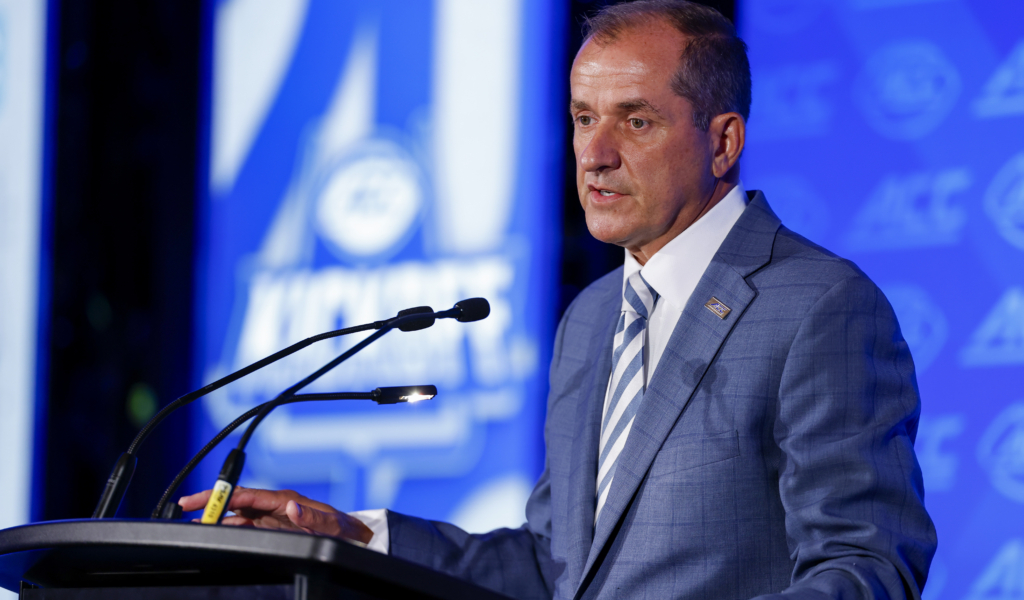
“Here is what I would say very directly, and I’ve said this multiple times. I’ve always wanted this conference to be a place where schools want to be, not that they have to be,” ACC Commissioner Jim Phillips said on Wednesday in Day 1 of ACC Kickoff. “So, I’ll leave it at that. I feel very good about what we’ve done over the course of the last five and a half years.”
While the ACC has done some good things the last few years, like Miami advancing to last year’s national championship game and having at least one team in 11 of the 12 College Football Playoff, it also has a few black eyes.
Clemson and Florida State sued the league to gain more control of their grant of rights and were rumored to leave the conference, as well. Also, an undefeated FSU team was left out of the CFP in 2023 and there have been a few eligibility issues, as well under Phillips’ leadership.
The league later strengthened its footprint with the additions of Stanford, Cal and SMU. But some wondered if those editions were the right moves for the conference.
“We strengthened ourselves during that time of movement, conference expansion with three great schools in two new markets. Again, I want people to want to be in the ACC, not forced to be in the ACC,” Phillips said.
Well, if someone wants to be in the ACC or anyone wants to leave, they have until the PCSA makes its way through congress to get it done.
“You got to work together and you got to collaborate, get to a happy medium,” Phillips said. “Maybe it’s not perfect for either side, but you get to the middle ground that at the end will absolutely help stabilize college sports.”