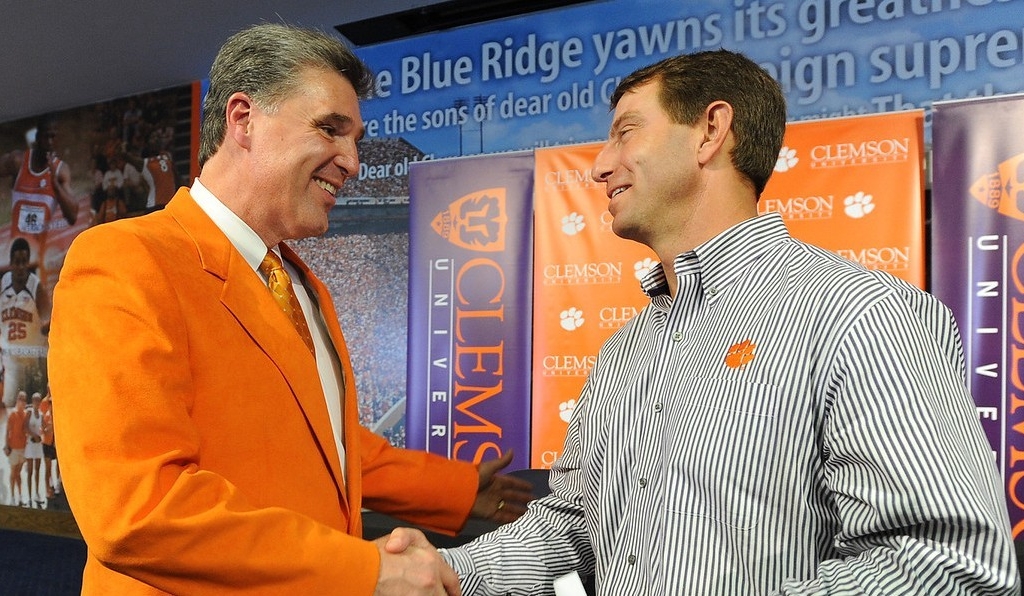
CLEMSON – Outside of athletics, Dan Radakovich had never won anything in his life.
At least until 2013, when he and his wife, Marcie, won an all-expenses-paid trip to Paris, France.
It was supposed to be four days of bliss beneath the Eiffel Tower’s twinkle and jazz music’s croon, free from the pressures of being Clemson’s athletic director – a position Radakovich had taken just three months earlier.
And then Dabo Swinney showed up with a napkin.
“Just before I got on the airplane, Dabo hands me this napkin,” Radakovich told The Clemson Insider. “(Swinney said) ‘I was thinking about this, and while you’re flying across the Atlantic, why don’t you give me some thoughts whenever you get back?’”
So Radakovich took that napkin through the airport security line, 35,000 feet above the Atlantic Ocean and across several time zones, studying a crude vision for Clemson football’s future sketched into fragile folds.
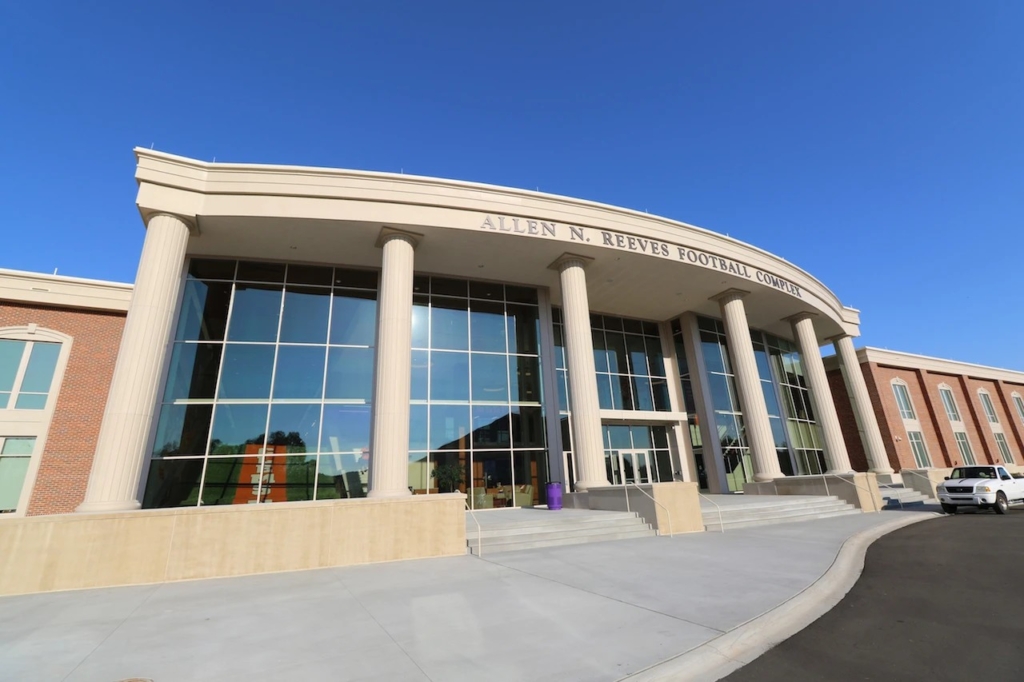
In about four years, Swinney’s illustration would become the Clemson landmark known as the Allen N. Reeves Football Facility.
At the time, though, his vision was a little hard to make out.
“Look, the napkin was not Michelangelo,” Radakovich said jokingly.
Luckily, it did not need to be. Radakovich had already heard the fourth-year coach’s dreams of sprawling practice fields, the building’s flow and even a full-sized slide.
In a way, the idea was the former Georgia Tech athletic director’s too.
“Dan Radakovich, I give him so much credit because that’s one of the things he was kind of adamant on when he came in here,” Swinney said. “He just kind of really challenged me on like, okay, let’s talk about five years from now. And I mean, I literally drew this thing out on a napkin. I’m just trying to get to know my new boss here, but he’s like, ‘Look, we need to spend some money and we need to spend it now.’”
At the time of Radakovich’s hiring in 2012, Clemson’s football team was a program on the rise. The Tigers had just upset LSU with fourth down heroics in the 2012 Chick-Fil-A Bowl, won an ACC Championship in 2011 and were poised to continue exponential growth under their young, fiery head coach.
Couple that success with low interest rates and increased fan buy-in, and it was time to get to work.
Upon his return to the United States and completion of napkin studying, Radakovich met with Davis Babb, the Chief Executive Officer of IPTAY, Clemson’s athletic fundraising branch.
The pair hammered out some math.
They found that Swinney’s palace of football fervor would cost around $25 million dollars in gifts, plus another $35 million in other funding, to build. Thus, Clemson needed 10 respective donors to give at least $2.5 million.
The only–or, at least, the biggest–problem?
No single donor had ever given more than one million to Clemson athletics. Now, they were asking for nearly triple that amount from 10 different individuals.
“You talk about people saying that’ll never work,” Radakovich said. “The chorus was very, very loud.”
Members of the critique choir started to quiet that fall, though, as Swinney’s Tigers raced to an 11-2 record, defeating No. 7 Ohio State 40-35 in the Orange Bowl on the third day of 2014.
Maybe, just maybe, the Tigers could be legitimate contenders. And maybe the facility could be more than a dream.
In the meantime, the football facility brain trust picked Leon J. Hendrix, Jr., known to most everyone as Bill, to be the first individual approached about the cornerstone partnership.
The selection made sense, as Hendrix was the living embodiment of Clemson.
He first arrived as a student in 1959, when attending Clemson after high school was as “natural as going from 11th to 12th grade.” He– and his son, years later–served as the Tigers’ student body president as a senior. In 2009, he won the Clemson Medallion, the highest public honor awarded for alumni service, while concluding a six-year stint as Clemson University’s Board of Trustees Chairman.
Hendrix and his wife, Pam, had also already given generously, helping refurbish the West End Zone wing of Memorial Stadium and building a student center on campus in their family’s name.
Armed with this context, Swinney carried his recent success–and a heaping pile of nerves–four hours away to Hendrix’s home in Kiawah Island, S.C., to ask for another $2.5 million.
Swinney rehearsed his pitch relentlessly on his drive to the coast. He knew what the money would build. He knew, especially with a few years of sales experience under his belt, that he was the best man for the task.
What Swinney was unsure of, however, was how Hendrix would respond.
“I’m sitting there talking to to Bill and Pam and like laying it all out and finally, the finally, the moment comes,” Clemson’s football coach recalled. “If you know Bill Hendrix, I’m in my mind, I’m like, ‘Okay, now at some point I got to tell him what I need.’”
Swinney knew exactly who he was speaking with – a man who was a part of Swinney’s very own hiring process back in 2008. Hendrix cherished Clemson’s 1981 national championship win like a treasured loved one.
So, in front of the family, Swinney took a deep breath, stared Hendrix in the eye, and began his well-oiled spiel.
“Well, Bill, were you at the ‘81 National Championship game,” Swinney asked.
“You’re damn right I was,” Hendrix replied.
“Do you really want to win another national championship,” Swinney asked back.
This fired an already animated Hendrix up.
“Yeah!” he shouted.
“Well look,” Swinney said. “I’m the best chance you got. And you’re the best chance I’ve got. But if you’ll give me $2.5 million, because I know Clemson people and Clemson people are competitive, if you lead the way and become our first cornerstone, we’ll be able to build this facility and others are going to follow.”
Before Swinney arrived at the Hendrix residence, Pam Hendrix was hesitant.
What else could this football coach possibly want from them?
“Dabo’s very convincing,” Hendrix said with a laugh. “Even though my wife was skeptical about it before Dabo got there, after he left, she looked at me and said, ‘You think we’re giving him enough?’”.
The first cornerstone was in place.
One season after Hendrix pledged his donation, the Tigers competed against Alabama in the 2015 National Championship game, capping off a magical, nearly-undefeated campaign. In 2016, Swinney made good on his promise, winning Clemson’s first championship in 35 years.
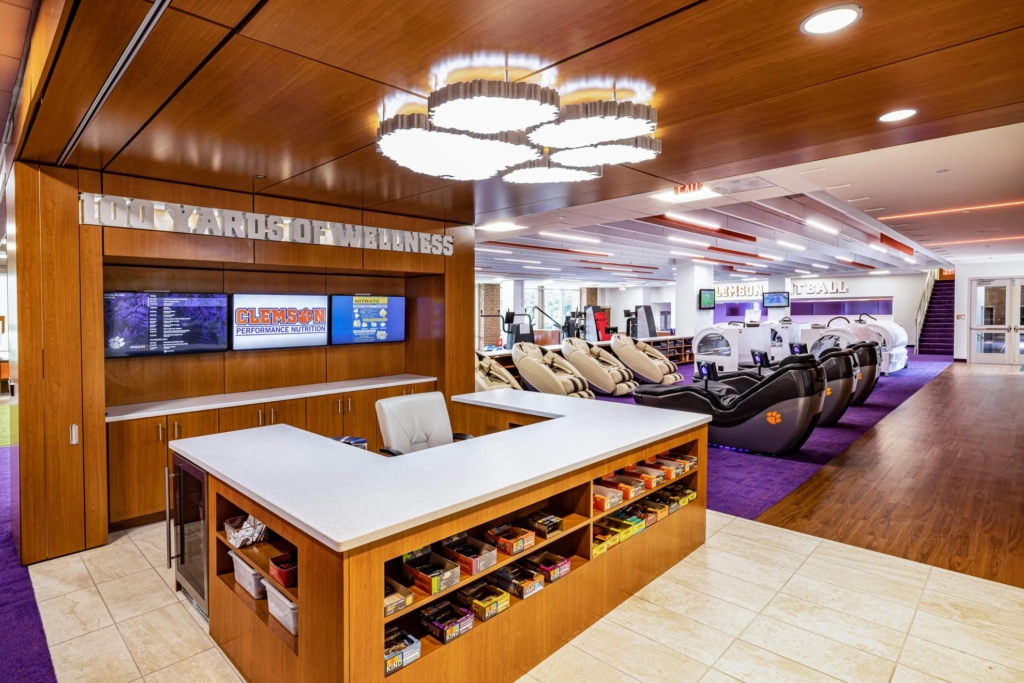
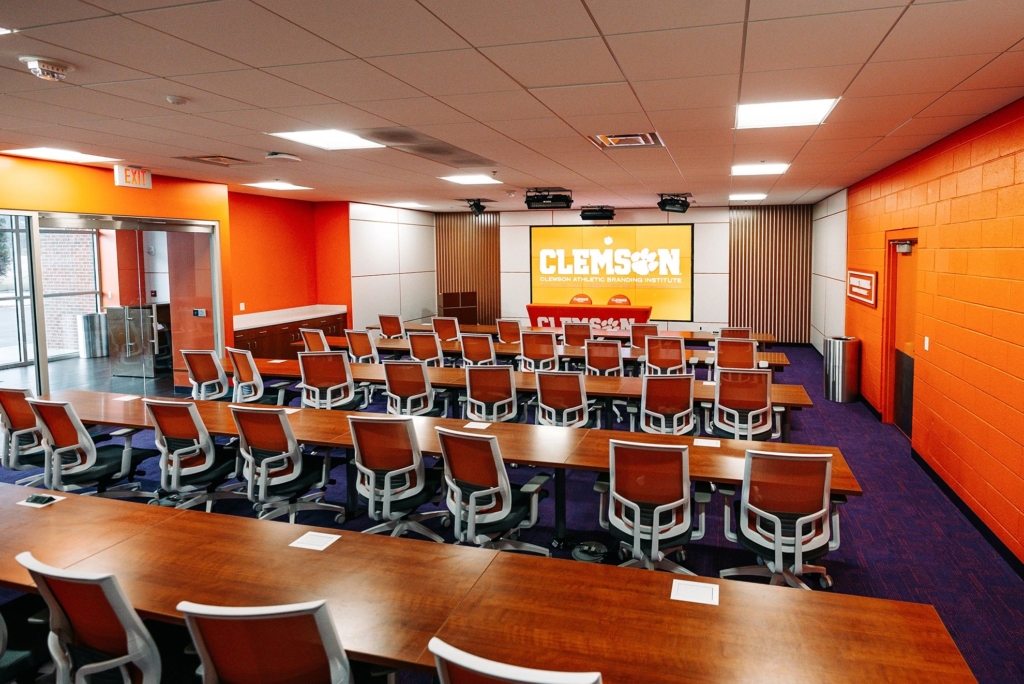
One month after the victory, the team officially moved into the Allen N. Reeves Football Facility — a facility that is still unmatched and is the standard in college football.
“It wasn’t like you needed this to win the National Championship, but you kind of knew it was happening,” Radakovich said. “From a recruiting perspective, everybody was like, ‘Okay, we know this is coming forward.’ But they didn’t win the first national championship being in that building. They did it in the old, hot area they had within the football stadium.”
Now, almost a decade has passed since the Tigers officially occupied the state-of-the-art complex that was born on a napkin. Since then, Clemson won another national title, competed for two, appeared in five more College Football Playoffs and won six additional ACC Championships.
On a bigger scale, NIL rules, revenue sharing and transfer regulations, hardly resemble the guidelines existing when Swinney drew his sketch back in 2013. Still, the Allen Reeves Football Complex stands as a factor for players deciding to come to Clemson.
“Everything here is top of the line and that’s a reason to come,” tight end Christian Bentancur said. “That’s not the only reason to come to a college but that definitely plays a factor.”
When Hendrix, Swinney and Radakovich drive around Clemson’s campus today, they feel slightly different shades of pride.
For Radakovich, who has since retired from collegiate athletics and has a home in the Clemson area, it is a pride in the people–including current athletic director Graham Neff–who have continued to expand on the facility, turning it into a pillar of Clemson’s “athletic village.”
For Swinney, it is security in knowing that Clemson football will have a place to stay for “a century.”
And for Hendrix, a man who once watched the majority of Clemson’s 4,000-person student body pack into Memorial Stadium in the early 60s, he gets to watch his grandchildren experience their own version of Clemson under the backdrop of their family’s legacy.
“I think they’re proud of it, and it makes me proud to see them here,” he said.