CLEMSON – With five games under its belt, Clemson has a much better idea of its strengths and weaknesses as a team than it did just over a month ago.
Since opening its season at LSU back on Sept. 5, the Tigers have established a starting quarterback in Tait Reynolds, a strong secondary presence and a hierarchy at running back.
Still, head coach Dabo Swinney and his team have some big improvements to make and questions to answer.
“We know we’re in a good spot, but we also know that we’re not where we need to be,” Tigers defensive end Will Heldt said.
With seven total regular season games and five conference games left on Clemson’s schedule, here is where the Tigers match up statistically in the ACC. These numbers reveal where Clemson has improved from last season, as well as areas that still need to be strengthened for a successful finish.
Passing Defense
It was no secret that last year, Clemson’s secondary, and thus, its passing defense, was a weak spot for first year defensive coordinator Tom Allen. The Tigers finished 11th in the ACC in pass yards allowed per game (251) and gave up over 600 combined passing yards in consecutive losses against SMU and Duke, prompting some changes in midweek defensive meetings.
The Tigers also collected just five interceptions on the season, an all-time low under Swinney.
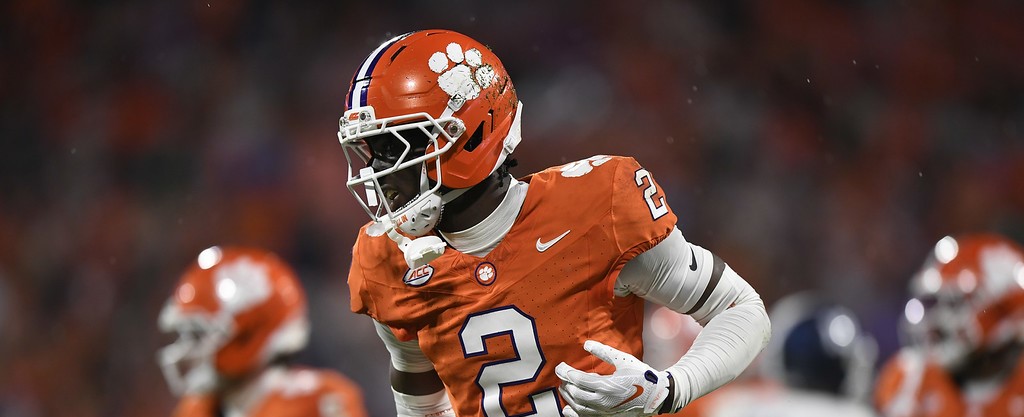
This season, however, the Tigers are allowing 217 passing yards per game, and that does not tell the full story of the most improved group on the team. Cornerbacks Ashton Hampton and Elliott Washington II are both on national ranking lists, as Hampton leads the nation in passes defended (nine) and Washington is tied for third-most interceptions (three).
Last season, Clemson’s defense also allowed 16 passes for 30 or more yards, and through five games, including the ACC’s best offense in Miami, they have only allowed seven plays of that nature. The Tigers also have only given up 44 passes of 10-plus yards compared to last year’s 128. Still, Clemson currently ranks 12th in overall pass defense.
Rushing Defense
In the last three years, Clemson has had an interesting relationship with rushing defense. In 2024, the Tigers finished 16th in the ACC in rush yards allowed per game (160), giving up an average of 4.71 yards per carry.
In 2025, Allen’s first year, the Tigers bounced back to finish third in the conference in rush defense, giving up only 105 yards per game on the ground. They also allowed eight fewer rushing touchdowns.
This season, however, that aspect of Clemson’s defense has not been as strong. Whether injuries, youth or depth is the issue, the Tigers have struggled to stop the run, currently giving up 164 rushing yards per game. This number is skewed by a poor opening performance at LSU and against Miami, but it has been an issue in most of the Tigers’ matchups. Clemson is currently 14th in the ACC with 4.65 yards allowed per carry, though five teams have given up more rushing touchdowns.
Passing Offense
After a three-year incumbent quarterback and an offensive coordinator leave a program, any team can expect some learning curves the next year. However, Clemson’s struggles through the air have been glaringly obvious so far.
The Tigers rank last in the ACC with only 183 passing yards per game, coming off of two seasons with an average of over 270 under veteran Cade Klubnik. However, Clemson is completing 63.4 percent of its passes, which ranks 11th. The Tigers rank 16th in the conference with only 34 passes of 10 or more yards.
Freshman quarterback Tait Reynolds’ best game through the air came in the most recent 41-13 loss to Miami, in which he threw for 295 yards on 66 percent completions. However, failures in the red zone kept the offense from capitalizing on his success in sustaining drives.
The Tigers are dead last in the ACC with only five red zone touchdowns.
Rushing Offense
One of the bright spots from Clemson’s season so far has been the run-game, at least in most of its matchups. Sophomore running back Gideon Davidson found his stride with consecutive 100-plus yard performances in wins over North Carolina and California, combining for three touchdowns.
As a whole, the Tigers rank 13th in the conference with 137.6 rushing yards per game and 3.82 yards per carry. They are currently 11th in the ACC with six rushing touchdowns and tied for sixth in total carries (180). They have run the ball more than eight other teams in the league.
Last season, Clemson averaged 124 rushing yards per game with 20 rushing touchdowns. The Tigers averaged 3.95 yards per carry and ran the ball two fewer times per game. So while the passing offense has struggled, the running attack has been improved overall.
Miscellaneous
The Tigers rank first in the conference in field goals made, with kicker Nolan Hauser knocking down 12 attempts. The next closest ACC team, Wake Forest, has only made nine.
Clemson is currently one of five ACC teams that are in the negative turnover margin, losing nine turnovers to six recovered. Only three teams have a worse rate. However, the six caused turnovers are tied for seventh in the conference.
The Tigers are currently responsible for ten sacks, which ranks 12th, and have allowed 17 sacks, which is second to last.
However, Clemson is currently third, and sixth, respectively, for kickoff and punt return yards, highlighted by wide receiver Bryant Wesco Jr.’s touchdown return against California.
Clemson looks to improve on its struggles and build on its successes next Saturday, when it takes on Charleston Southern at Memorial Stadium at noon.